
Activated charcoal has been a skincare shelf staple for years, showing up in face washes, masks and scrubs, almost always marketed around deep cleansing and detox. But unlike a lot of trending ingredients that ride a wave of marketing without much substance behind them, activated charcoal’s core function is actually rooted in simple, well-understood physical chemistry.
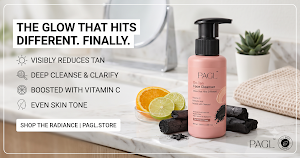
This guide breaks down what activated charcoal actually does on your skin, its real benefits, who it works best for, and how it fits into a formula like the PAGL De-Tan Face Cleanser with Vitamin C, Salicylic Acid and Charcoal.
What Is Activated Charcoal?
Activated charcoal is a fine, porous form of carbon that has been processed, usually through high-heat treatment, to dramatically increase its surface area. This processing gives it an enormous number of tiny pores capable of trapping and holding onto particles many times its own size, a property known as adsorption.
In skincare, this same adsorption property is what makes activated charcoal effective at drawing out oil, dirt and impurities from the surface of your skin and from within your pores, rather than simply pushing them around during a regular wash.
How Does Activated Charcoal Work on the Skin?
When applied to the skin, activated charcoal’s porous structure acts almost like a magnet for oil, dirt and other particles sitting on the surface or lodged in your pores. As you massage a charcoal-based cleanser into your skin, these impurities bind to the charcoal’s surface, and rinsing washes both away together.
This is a purely physical process rather than a chemical one, which is part of why activated charcoal is generally well tolerated across different skin types, it works by trapping and removing, not by altering your skin’s chemistry the way some active ingredients do.
Key Benefits of Activated Charcoal for Your Face
1. Deep Cleanses Pores of Dirt and Oil
This is activated charcoal’s primary, best-documented benefit. Its adsorption properties allow it to draw out buildup from deep within your pores, offering a more thorough clean than a standard cleanser working on the surface alone.
2. Helps Reduce the Appearance of Blackheads
Since blackheads form from oxidized oil and debris trapped in open pores, charcoal’s ability to draw this buildup out with regular use can help reduce how visible and frequent blackheads appear over time.
3. Supports Oil Control for Oily and Combination Skin
By clearing excess oil from the skin’s surface and pores, activated charcoal supports a more balanced, less shiny complexion throughout the day, making it a popular choice for oily and combination skin types.
4. Clears Pollution and Environmental Buildup
For anyone dealing with daily exposure to dust, traffic pollution or general urban grime, activated charcoal’s ability to draw out these particles makes it particularly useful as part of an evening cleansing routine, clearing away a full day’s environmental buildup.
5. Supports Tan Reduction Indirectly
While charcoal itself does not brighten skin the way Vitamin C does, its deep-cleansing action clears the surface buildup that can make tan look more pronounced and uneven. This makes it a strong complementary ingredient alongside brightening actives in a tan-removal formula.
6. Generally Gentle Enough for Regular Use
Because it works through physical adsorption rather than chemical exfoliation, activated charcoal tends to be gentle enough for daily use in a well-formulated cleanser, without the same risk of irritation that stronger chemical actives can sometimes carry.
Who Should Use Activated Charcoal on Their Face?
Activated charcoal works particularly well for:
- Oily and combination skin, due to its oil-drawing, pore-clearing properties
- Anyone dealing with blackheads, since it directly targets the buildup that causes them
- People with daily pollution exposure, especially those in urban areas or with long commutes
- Tanned or dull skin, when paired with brightening ingredients like Vitamin C
- Most skin types, including generally sensitive skin, given its gentle, physical mode of action, though a patch test is always a sensible first step for very reactive skin
Charcoal Face Wash vs Charcoal Mask: What Is the Difference?
Activated charcoal appears in several different skincare formats, and it helps to understand how these differ.
Charcoal Face Wash
A charcoal cleanser is designed for regular, twice-daily use, offering consistent, everyday deep cleansing without needing to sit on the skin for extended periods. This makes it a practical, low-maintenance way to include charcoal in your routine.
Charcoal Masks
Masks typically contain a higher concentration of charcoal and are left on the skin for a set period, offering a more intensive, occasional treatment. These are generally used once or twice a week rather than daily, given their more concentrated formulation.
For most people, a charcoal cleanser used consistently offers more practical, cumulative benefits than an occasional mask alone, though the two can certainly be used together as part of a broader routine.
-
De-Tan Face Cleanser with Vitamin C, Salicylic Acid & Charcoal
Original price was: ₹599.00.₹540.00Current price is: ₹540.00. -
Rose Water Face Mist Spray | Natural Toner for Face, Skin & Hair | Hydrating, Refreshing & Alcohol-Free
Original price was: ₹199.00.₹180.00Current price is: ₹180.00.


Why Charcoal Works Best in Combination
While activated charcoal is genuinely effective at deep cleansing, it works even better when paired with ingredients that address brightening and gentle exfoliation, since tan and dullness involve more than just surface buildup. This is exactly the thinking behind the PAGL De-Tan Face Cleanser, which combines Activated Charcoal with two complementary ingredients:
- Vitamin C, which brightens skin tone and addresses the dullness that surface buildup can make worse
- Salicylic Acid, which gently exfoliates dead, tanned skin cells, working alongside charcoal’s deep-cleansing action rather than duplicating it
Together, this combination clears buildup, brightens tone and exfoliates dead skin cells, addressing tan and dullness from multiple angles in a single daily formula.
How to Use a Charcoal Cleanser Correctly
- Wet your face with room-temperature water.
- Apply a coin-sized amount of the cleanser to your palm.
- Massage gently in circular motions for 30 to 60 seconds, allowing the charcoal to draw out impurities.
- Rinse thoroughly with lukewarm water until no residue remains.
- Follow with a toner, such as the PAGL Rose Water Face Mist, to rebalance your skin after cleansing.
- Use twice daily, ideally including an evening wash to clear the day’s accumulated buildup before bed.
Common Misconceptions About Activated Charcoal
- “Charcoal detoxifies your entire skin.” In reality, its role is more specific, drawing out surface and pore-level impurities through adsorption, not a broader detox in the way it is sometimes marketed.
- “More charcoal means a deeper clean.” A well-formulated cleanser with a moderate amount of charcoal, combined with complementary ingredients, is more effective than an extremely high concentration used in isolation.
- “Charcoal alone will remove tan.” Charcoal supports tan removal by clearing buildup, but brightening and exfoliating ingredients are what directly address pigmentation, which is why combination formulas tend to outperform charcoal-only products for this specific concern.
Building a Complete Routine Around Charcoal Cleansing
Charcoal cleansing works best as the first step in a complete routine rather than a standalone solution. Once your skin is clear of surface buildup, following with a hydrating toner and, in the morning, sunscreen, ensures the rest of your routine can work effectively on freshly cleansed skin.
You can explore more products in the PAGL Face Care collection to build a complete routine around consistent, effective charcoal cleansing.
Conclusion – A Simple, Well-Understood Ingredient That Still Earns Its Place
Activated charcoal’s popularity in skincare is backed by a genuinely simple, effective mechanism, its ability to physically draw out oil, dirt and impurities from your skin and pores. Used consistently, particularly as part of a combination formula that also brightens and exfoliates, it plays a real, practical role in keeping skin clear, balanced and ready to show the results of the rest of your routine.
If you are looking for a cleanser that puts activated charcoal to work alongside brightening and exfoliating ingredients, the PAGL De-Tan Face Cleanser with Vitamin C, Salicylic Acid and Charcoal brings all three together in one daily formula.
Frequently Asked Questions
Activated charcoal works through adsorption, drawing out oil, dirt and impurities from the surface of your skin and from within your pores. This supports deep cleansing, helps reduce blackheads, and controls excess oil.
Yes, activated charcoal is particularly well suited to oily and combination skin, since its oil-drawing properties help clear excess oil from the surface and pores, supporting a more balanced, less shiny complexion.
Charcoal supports tan reduction indirectly by clearing surface buildup that can make tan look more pronounced. It works best paired with brightening ingredients like Vitamin C, exactly the combination found in the PAGL De-Tan Face Cleanser.
Activated charcoal generally works through a gentle, physical process rather than a chemical one, making it suitable for most skin types including sensitive skin. A patch test is still a sensible first step for very reactive skin.
A charcoal face wash is designed for consistent, twice-daily use and offers practical, cumulative benefits, while a charcoal mask is more concentrated and used occasionally, once or twice a week, for a more intensive treatment.
Ready to experience the difference? Shop PAGL De-Tan Face Cleanser today.















Leave a Reply