
If your face has started looking darker, duller or uneven after spending more time outdoors, you are probably wondering one simple thing: which face cleanser is best for tan removal?
With so many products labelled as de-tan face wash, brightening cleanser, tan removal cleanser and skin-brightening face wash, choosing the right one can become confusing. Some products focus on exfoliation, some on brightening, while others mainly target oil, sweat and pollution.
The important thing to understand is that a face cleanser cannot magically erase a tan overnight. Sun exposure stimulates melanin production, which can make the skin appear darker. A good skincare routine therefore needs to address both the existing appearance of tanning and the continued exposure that can cause more darkening.
A well-formulated de-tan cleanser can be a useful part of that routine. The right formula can help remove sweat, excess oil, pollution and surface buildup while using ingredients designed to support brighter, more even-looking skin.
In this guide, we will answer the questions people commonly ask:
- Which cleanser is best for tan removal?
- Which is the best de-tan face wash?
- How can you remove face tan?
- Does de-tan face wash really work?
- Which ingredients should you look for?
- How should you use a de-tan cleanser?
- How long does tan removal take?
What Is a Face Tan?
Before choosing a de-tan cleanser, it helps to understand what a tan actually is.
When your skin is exposed to ultraviolet radiation from the sun, your body increases melanin production. Melanin is the pigment responsible for much of your skin, hair and eye colour, and increased melanin production can make exposed skin appear darker.
This is why you may notice that your face looks darker after a holiday, outdoor sports, commuting, travelling or simply spending more time outside.
A tan is not simply dirt sitting on the surface of your skin. This is an important distinction.
Washing your face can remove dirt, sweat, excess oil and pollution, but it cannot simply wash away all of the pigment produced by your skin in response to sun exposure.
This is also why products promising instant or overnight tan removal should be approached carefully. Genuine changes in pigmentation take time, and continued sun exposure can make darkening persist.
The goal of a good routine should therefore be:
- Clean the skin properly.
- Support a brighter, more even-looking appearance.
- Avoid excessive irritation.
- Protect the skin from further UV exposure.
- Stay consistent long enough to see gradual improvement.
Which Cleanser Is Best for Tan Removal?
There is no single cleanser that is automatically the best for every person because skin type, sensitivity and the severity of tanning can vary.
However, when choosing a cleanser for tanned or dull-looking skin, look beyond the words “de-tan” on the front of the bottle.
A useful de-tan cleanser should ideally combine effective cleansing with ingredients that support your specific skincare concerns.
Look for these three things:
1. A brightening-support ingredient
Ingredients such as Vitamin C are commonly used in skincare to support brighter and more even-looking skin.
Vitamin C can be found in different types of skincare products, including serums and cleansers. In a cleanser, however, it is part of a rinse-off formula, so expectations should remain realistic.
The purpose is not to change your natural skin colour. Instead, the goal is to help improve the dull, uneven appearance that can develop after sun exposure.
2. A gentle exfoliating ingredient
Dead skin cells can contribute to a rough or dull-looking complexion.
Salicylic Acid is a beta-hydroxy acid commonly used in skincare, particularly for oily and congested skin. In a cleanser, it can help with surface cleansing and exfoliation while also supporting pore care.
For someone dealing with tanning, dullness and excess oil at the same time, a cleanser containing Salicylic Acid can therefore be a practical option.
However, more exfoliation is not always better. Overusing exfoliating products can cause irritation, which may make the skin look worse rather than better.
3. An ingredient that helps remove buildup
Sweat, oil, pollution and product residue can accumulate on the face, especially in hot and humid conditions.
Activated Charcoal is commonly used in cleansing products because of its adsorptive properties and its association with removing impurities and excess oil from the skin.
This makes a combination formula particularly useful for people whose skin becomes oily, sweaty or dull after spending time outdoors.
What Makes a Good De-Tan Face Wash?
When comparing different de-tan face washes, don’t choose only based on the packaging or the percentage of a single ingredient.
Instead, consider the entire formula.
A practical de-tan cleanser should ideally provide:
| What to Look For | Why It Matters |
|---|---|
| Gentle cleansing | Removes sweat, dirt, oil and daily buildup |
| Brightening-support ingredients | Helps improve the appearance of dull, uneven skin |
| Gentle exfoliation | Helps remove surface dead skin cells |
| Oil and pollution cleansing | Useful for outdoor and urban environments |
| Suitable texture | Makes the product easier to use consistently |
| Skin-friendly formula | Helps reduce unnecessary irritation |
| Clear directions | Makes correct daily use easier |
The best cleanser is ultimately one that you can use consistently without leaving your skin excessively dry, tight or irritated.
Is a Regular Face Wash Enough to Remove Tan?
A regular face wash can absolutely be useful for maintaining clean skin, but cleansing and tan management are not exactly the same thing.
A conventional cleanser primarily focuses on removing dirt, oil, sweat and other impurities.
A de-tan cleanser is generally formulated with additional ingredients intended to support concerns such as dullness, uneven-looking skin and the appearance of tanning.
That does not mean a de-tan cleanser can completely reverse sun-induced pigmentation by itself.
Think of cleansing as one part of the solution, rather than the entire solution.
For example, you could have an excellent cleanser but continue spending several hours outdoors without adequate sun protection. New UV exposure can continue stimulating pigmentation, working against the progress you are trying to make.
Dermatologists recommend broad-spectrum sunscreen with SPF 30 or higher as part of sun protection, and sunscreen is particularly important when managing dark spots and pigmentation.
Does De-Tan Face Wash Really Work?
Yes, a properly formulated de-tan face wash can play a useful role in a skincare routine, but it is important to understand what “work” actually means.
A cleanser can help:
- Remove sweat and excess oil.
- Remove dirt and pollution from the skin.
- Reduce surface buildup.
- Support gentle exfoliation when appropriate ingredients are included.
- Improve the appearance of dull-looking skin.
- Support a more even-looking complexion over time.
What it should not promise is instant removal of every type of pigmentation after one or two washes.
Sun tanning is associated with increased melanin production, so the visible change is not simply a layer of dirt that can be scrubbed away.
This is why consistent skincare and sun protection matter.
PAGL’s own de-tan cleanser guidance follows this principle: the product is positioned around Vitamin C, Salicylic Acid and Activated Charcoal rather than promising overnight removal.
How to Remove Face Tan at Home
If your goal is to reduce the appearance of face tan at home, start with a simple routine rather than immediately buying multiple strong products.
Step 1: Cleanse
Start with a cleanser designed around your skin type and concerns.
For tanned, oily or dull-looking skin, a formula containing brightening-support and exfoliating ingredients can be useful.
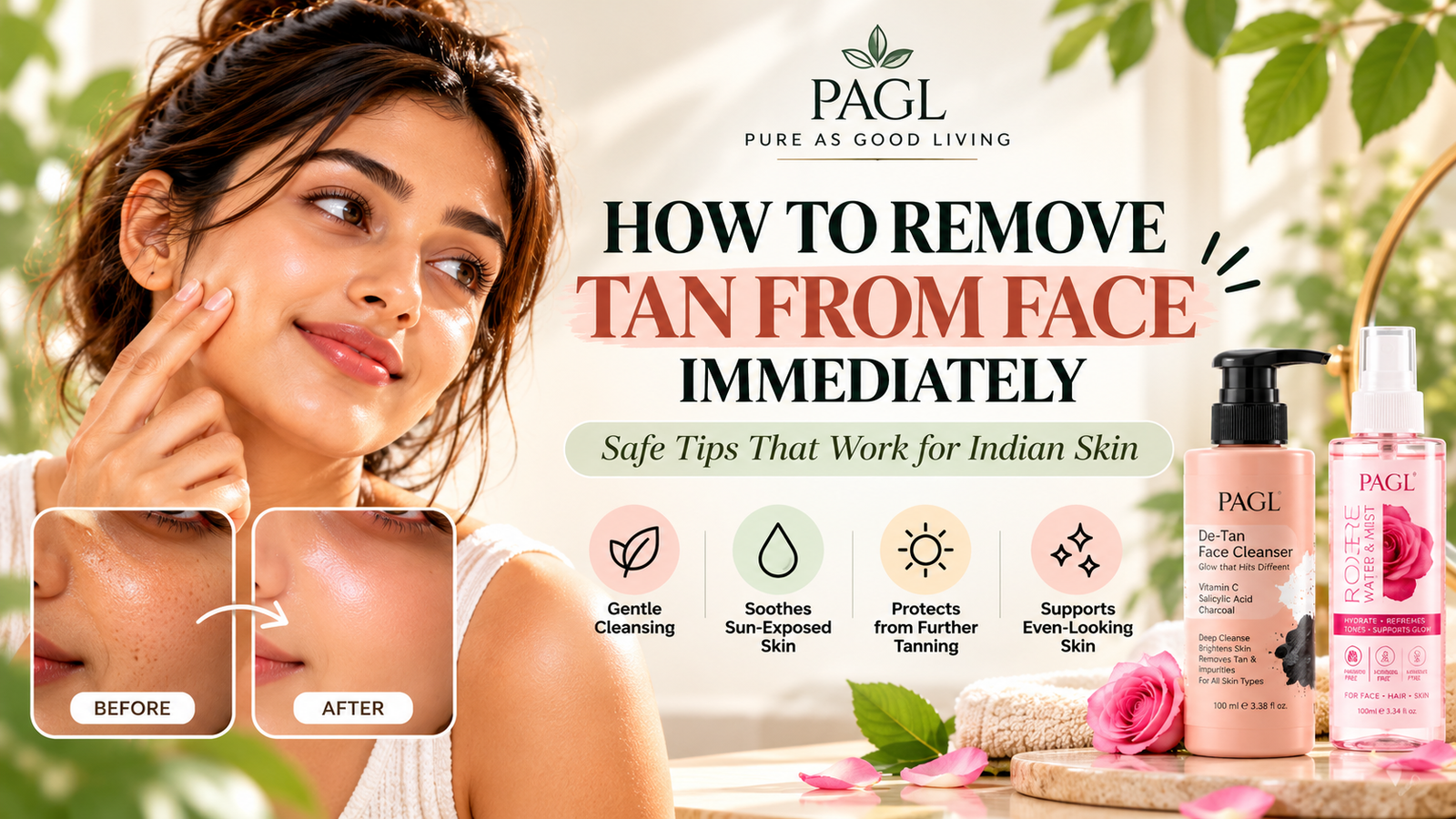
The PAGL De-Tan Face Cleanser with Vitamin C, Salicylic Acid and Charcoal is one example of a combination cleanser designed for this type of routine.
The current PAGL product guidance recommends wetting the face, applying a small amount, gently massaging it in circular motions for approximately 30–60 seconds and then rinsing thoroughly.
Step 2: Hydrate
After cleansing, your skin may benefit from a lightweight hydrating product.
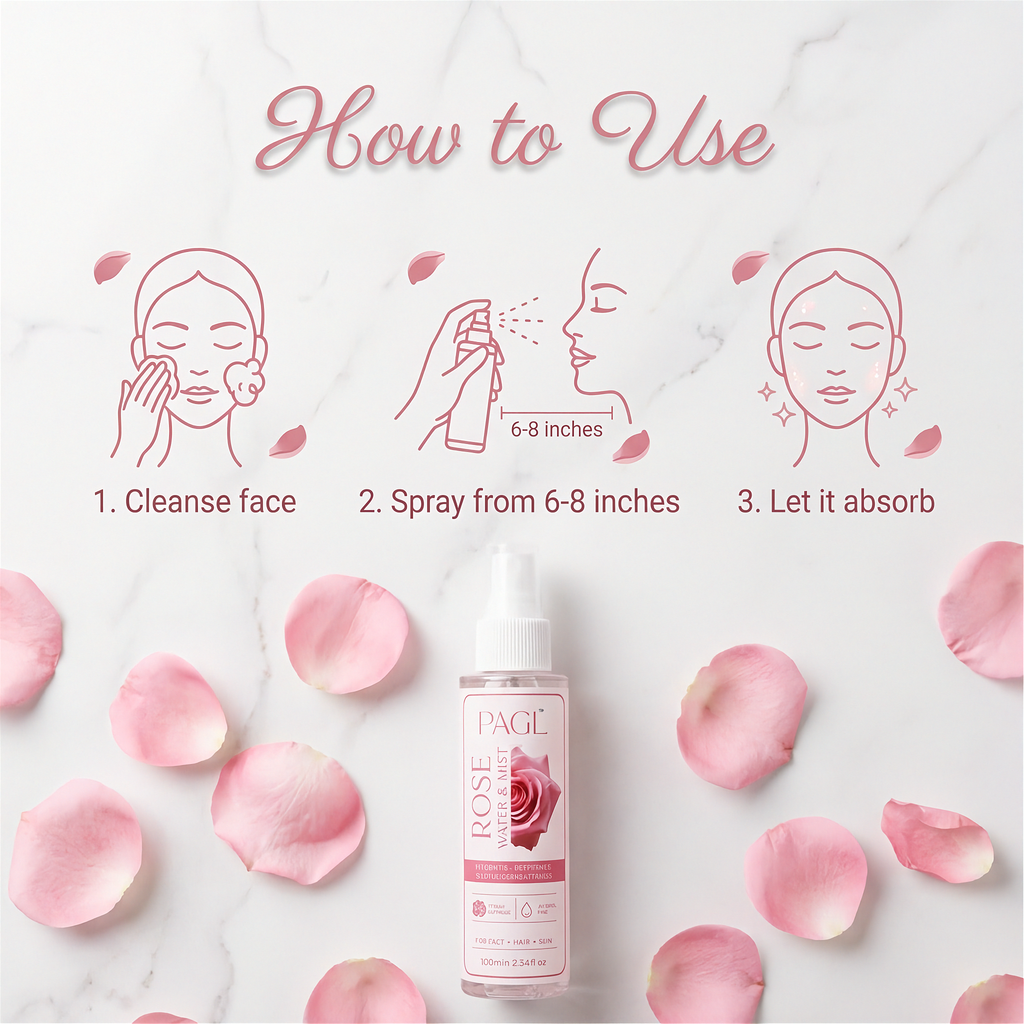
A simple rose water mist can be used as a refreshing step after cleansing.
The PAGL Rose Water Face Mist can be incorporated here as an alcohol-free hydrating mist.
Step 3: Moisturize
A cleanser should not be expected to provide all of your skin’s hydration needs.
Apply a moisturizer suited to your skin type after cleansing and any lightweight treatment products.
If your skin becomes dry or tight after cleansing, reconsider the frequency or formula you are using rather than adding more exfoliating products.
Step 4: Protect Your Skin From the Sun
This is arguably the most important part of any tan-management routine.
If you are constantly exposing your skin to UV radiation without adequate protection, it becomes much harder to manage sun-related darkening.
The American Academy of Dermatology recommends broad-spectrum, water-resistant sunscreen with SPF 30 or higher and recommends reapplying approximately every two hours when outdoors, or after swimming or sweating.
For people dealing with hyperpigmentation, the AAD also notes that visible light can contribute to dark spots, particularly in darker skin tones, and recommends tinted sunscreen containing iron oxide in appropriate cases.
Best De-Tan Face Wash for Different Skin Types
The same cleanser will not necessarily feel the same on every person’s skin.
For oily skin
If your skin becomes oily quickly, look for a cleanser that effectively removes excess oil without leaving the skin feeling stripped.
Salicylic Acid can be particularly useful in routines focused on oily or congested skin.
A formula combining Salicylic Acid with a cleansing ingredient such as Activated Charcoal may be appealing if oil, pollution and tanning are all concerns.
For combination skin
Combination skin often requires balance.
You want enough cleansing to control oil in the T-zone without excessively drying the cheeks.
Start with the recommended frequency and monitor how your skin responds.
For dry skin
If your skin is already dry, tight or easily irritated, be more cautious with exfoliating cleansers.
Using a stronger product more frequently does not necessarily produce faster results.
Look for a gentle routine that includes hydration and moisturizer alongside cleansing.
For sensitive skin
Sensitive skin requires extra caution.
Patch testing a new skincare product before applying it broadly can help identify whether your skin reacts to the formula.
If a product consistently burns, stings or causes irritation, stop using it. The AAD recommends choosing gentle skincare products and notes that irritation itself can worsen the appearance of dark spots.
How Often Should You Use a De-Tan Face Wash?
The correct frequency depends on the product formula and your skin’s tolerance.
Some products are designed for daily use, while others containing stronger exfoliating ingredients may need a more cautious approach.
For the PAGL De-Tan Face Cleanser, the current product guidance recommends use in the morning and evening.
However, skincare should always be adjusted according to your individual response.
If your skin becomes:
- Extremely dry
- Tight
- Red
- Burning
- Persistent or unusually irritated
reduce frequency or discontinue use and consider professional skincare advice.
The objective is consistent, comfortable skincare — not aggressive exfoliation.
How Long Does It Take to Remove Face Tan?
One of the biggest mistakes people make is expecting a face cleanser to remove tan in a few days.
Your skin needs time to recover from sun exposure and gradually return toward its usual appearance.
The timeline can vary significantly depending on:
- How much sun exposure you have had.
- Your natural skin tone.
- How long the tanning has been present.
- Whether you continue getting significant UV exposure.
- Your skincare routine.
- Whether the discoloration is actually a tan or another form of pigmentation.
The American Academy of Dermatology notes that some dark spots can take months to fade, particularly when pigment is deeper in the skin.
That is why it is better to think in terms of gradual improvement rather than a fixed “tan removal in X days” promise.
Why Sunscreen Is Essential With a De-Tan Cleanser
Imagine spending several weeks trying to improve your skin’s appearance while continuing to expose it to strong UV radiation without adequate protection.
You are essentially fighting the same process that caused the tanning in the first place.
Sun exposure stimulates melanin production and can worsen hyperpigmentation. Sunscreen helps reduce further UV exposure and therefore plays a critical role in preventing additional darkening.
Your basic morning routine can therefore look like:
Cleanser → Hydrating mist → Treatment if needed → Moisturizer → Sunscreen
At night:
Cleanser → Hydrating mist → Treatment if needed → Moisturizer
Keeping the routine simple makes it much easier to stay consistent.
De-Tan Face Wash vs Home Remedies
Search for “how to remove face tan” and you will find countless home remedies involving lemon juice, baking soda, harsh scrubs and other kitchen ingredients.
The problem is that natural does not automatically mean gentle or safe.
Aggressive scrubbing can irritate the skin, and irritation can make pigmentation concerns more difficult to manage.
A better approach is to use products formulated specifically for facial skin and follow a consistent routine.
If your skin develops persistent pigmentation, melasma-like patches or dark areas that do not improve, consider consulting a dermatologist rather than repeatedly trying stronger home remedies.
Why You Should Avoid “Instant Tan Removal” Claims
A good skincare product should set realistic expectations.
If a cleanser claims that your entire tan will disappear after one wash, be skeptical.
Cleansing can immediately make skin look fresher by removing sweat, oil, pollution and surface buildup. That is different from reversing pigmentation caused by sun exposure.
A more realistic goal is:
Clean skin → less surface buildup → consistent skincare → sun protection → gradual improvement in appearance.
This approach may sound less dramatic than an “instant tan removal” claim, but it is much more useful when building a sustainable skincare routine.
PAGL De-Tan Face Cleanser: A Simple Combination Approach
For someone specifically looking for a de-tan cleanser, the PAGL De-Tan Face Cleanser with Vitamin C, Salicylic Acid and Charcoal brings three complementary ingredients into one cleansing step.
Vitamin C
Vitamin C is widely used in skincare for antioxidant support and brighter-looking skin.
In a cleanser, it forms part of a rinse-off routine rather than functioning like a leave-on serum.
Salicylic Acid
Salicylic Acid is a BHA commonly used to help exfoliate and manage oil and clogged pores.
This can make it useful for people whose tanned skin is also oily or congested.
Activated Charcoal
Activated Charcoal is included for its cleansing and adsorptive properties and is commonly used in products aimed at removing oil and impurities.
Together, these ingredients make the formula relevant for people looking for a cleanser that goes beyond basic dirt removal.
You can learn more about the product and its intended use on the PAGL De-Tan Face Cleanser product page.
A Simple De-Tan Skincare Routine for Indian Skin
Indian skin is exposed to a range of environmental factors including strong sunlight, heat, humidity, pollution and frequent outdoor commuting.
Instead of building an unnecessarily complicated routine, start with the basics.
Morning
1. Cleanse
Use your de-tan cleanser to remove overnight oil and buildup.
2. Hydrate
Use a lightweight hydrating mist if your skin benefits from it.
3. Moisturize
Choose a moisturizer according to your skin type.
4. Sunscreen
Apply broad-spectrum SPF 30 or higher as appropriate, particularly before outdoor exposure.
Evening
1. Cleanse
Remove sunscreen, sweat, pollution and daily buildup.
2. Hydrate
Use a gentle hydrating mist if desired.
3. Treatment
Add targeted skincare only if your skin tolerates it.
4. Moisturize
Finish with a suitable moisturizer.
The biggest advantage of this routine is that every step has a specific purpose.
Staff picks
-
De-Tan Face Cleanser with Vitamin C, Salicylic Acid & Charcoal
Original price was: ₹599.00.₹540.00Current price is: ₹540.00. -
Rose Water Face Mist Spray | Natural Toner for Face, Skin & Hair | Hydrating, Refreshing & Alcohol-Free
Original price was: ₹199.00.₹180.00Current price is: ₹180.00.


7 Mistakes to Avoid When Trying to Remove Face Tan
1. Scrubbing too hard
More friction does not mean faster tan removal.
2. Using multiple exfoliating products
Combining several exfoliating products can increase irritation.
3. Skipping sunscreen
This allows continued UV exposure to work against your skincare routine.
4. Expecting overnight results
Pigmentation takes time to change.
5. Changing products every few days
Constantly switching products makes it difficult to understand what is actually working.
6. Using harsh DIY ingredients
A kitchen ingredient being natural does not automatically make it suitable for facial skin.
7. Trying to change your natural skin colour
The goal of good skincare should be healthier-looking, comfortable and more even-looking skin — not changing your natural complexion.
So, Which Face Cleanser Is Best for Tan Removal?
If you are choosing a face cleanser specifically for tanning, look for a product that combines effective cleansing, gentle exfoliation and brightening-support ingredients rather than relying on an “instant de-tan” claim.
For oily or combination skin, ingredients such as Salicylic Acid can be useful. For dull-looking skin, Vitamin C is a popular brightening-support ingredient. For sweat, oil and pollution buildup, cleansing ingredients such as Activated Charcoal can complement the formula.
The PAGL De-Tan Face Cleanser with Vitamin C, Salicylic Acid and Charcoal follows this combination approach and can be incorporated into a simple daily skincare routine.
But remember: the cleanser is only one part of the process.
Cleanse consistently. Hydrate your skin. Moisturize. Protect yourself from the sun. And give your skin time.
That combination is much more realistic than expecting a face wash to erase a tan overnight.
Conclusion – Consistency Matters More Than Instant Results
So, which cleanser is best for tan removal?
The answer is not simply the cleanser with the biggest “de-tan” claim on the label.
Look for a formula that matches your skin type and contains useful ingredients for your specific concerns. A combination of cleansing, gentle exfoliation and brightening support can make a de-tan cleanser a useful part of your routine.
The PAGL De-Tan Face Cleanser combines Vitamin C, Salicylic Acid and Activated Charcoal in one daily cleansing formula, making it an option for people dealing with tanning, dullness, excess oil and everyday buildup.
However, no cleanser should be expected to do everything.
If sun exposure continues without adequate protection, tanning and pigmentation can continue as well. Daily sunscreen, sensible sun protection and a consistent skincare routine are therefore just as important as choosing the right cleanser.
If you are looking for a simple place to start, build your routine around cleanse → hydrate → moisturize → protect and give your skin enough time to respond.
Explore the PAGL De-Tan Face Cleanser as part of your everyday skincare routine.
Frequently Asked Questions
A good de-tan cleanser should match your skin type and ideally combine effective cleansing with ingredients that support brighter-looking skin and gentle exfoliation. Ingredients such as Vitamin C, Salicylic Acid and Activated Charcoal can serve different roles in a de-tan formula.
There is no single de-tan face wash that is best for everyone. Look for a formula suited to your skin type, avoid unrealistic overnight claims and choose products with clearly identified ingredients. The PAGL De-Tan Face Cleanser combines Vitamin C, Salicylic Acid and Activated Charcoal.
Start with consistent cleansing, hydration, moisturizing and daily sun protection. A cleanser with brightening-support and gentle exfoliating ingredients can help improve the appearance of dull or tanned skin over time. Avoid aggressive scrubbing and harsh home remedies.
A de-tan face wash can help remove sweat, oil, pollution and surface buildup while supporting brighter-looking skin when formulated with appropriate ingredients. However, it should not be expected to instantly reverse all sun-induced pigmentation. Consistency and sun protection are important.
It depends on the product formula and your skin’s tolerance. Follow the manufacturer’s directions. If the cleanser causes persistent dryness, burning, redness or irritation, reduce use or discontinue it and seek professional advice if needed.
Yes. A cleanser and sunscreen perform different functions. A cleanser removes daily buildup, while sunscreen helps protect the skin from UV exposure. Daily sun protection is an important part of managing tanning and pigmentation.
A face wash should not be expected to completely remove a tan in one day. Cleansing can remove dirt, oil, sweat and surface buildup, making the skin look fresher, but sun-induced pigmentation develops within the skin and takes time to fade.
Yes. De-tan skincare can be used by both men and women. The more important factors are your skin type, sensitivity and specific skincare concerns.
The timeline varies depending on the amount and duration of sun exposure, your skin and the type of pigmentation involved. Consistent skincare and sun protection are important because continued UV exposure can contribute to further darkening.
You can, but active ingredients should be introduced carefully. Using several exfoliating or potentially irritating products together may increase the risk of irritation. Start with a simple routine and add products gradually according to your skin’s tolerance.
For more beginner-friendly skincare guides, explore the PAGL blog.














Leave a Reply