
If you experience frequent breakouts, you have probably heard that certain foods can cause acne.
Chocolate, milk, sweets, fried food and sugary drinks are often blamed for pimples. But is it really that simple?
Not exactly.
Acne is a complex skin condition influenced by several factors, including oil production, clogged pores, inflammation, hormones, genetics and skincare habits. Diet may also play a role for some people, but there is no universal list of foods that every person with acne must completely eliminate.
Research suggests that diets high in rapidly absorbed carbohydrates and high-glycemic foods may be associated with more acne in some populations. Evidence around dairy, particularly cow’s milk, is also suggestive but mixed. At the same time, current dermatology guidelines do not recommend a specific acne diet for everyone because more high-quality research is needed.
So rather than thinking:
“Never eat these foods if you have acne.”
A better approach is:
“Which foods might be worth limiting or monitoring if I notice they are associated with my breakouts?”
In this guide, we will look at 10 foods and food categories commonly discussed in relation to acne, what the evidence says, what you can eat instead and how to identify whether your own diet may be affecting your skin.
Can Food Really Cause Acne?
Before discussing individual foods, it is important to understand one thing.
Food is only one potential factor.
You can eat a very healthy diet and still develop acne.
Likewise, eating chocolate or a slice of pizza does not automatically mean you will wake up with a pimple the next morning.
Acne develops through a combination of biological processes.
Diet may influence some of these processes, particularly through blood sugar, insulin-related pathways and possibly hormones or other components associated with certain foods.
A systematic review of dietary studies found that higher-glycemic diets and higher glycemic loads were positively associated with acne in the available evidence, although the effect was modest and further research is needed. The evidence concerning dairy was more inconsistent and appeared to vary across populations.
This means your overall eating pattern may be more important than one individual food.
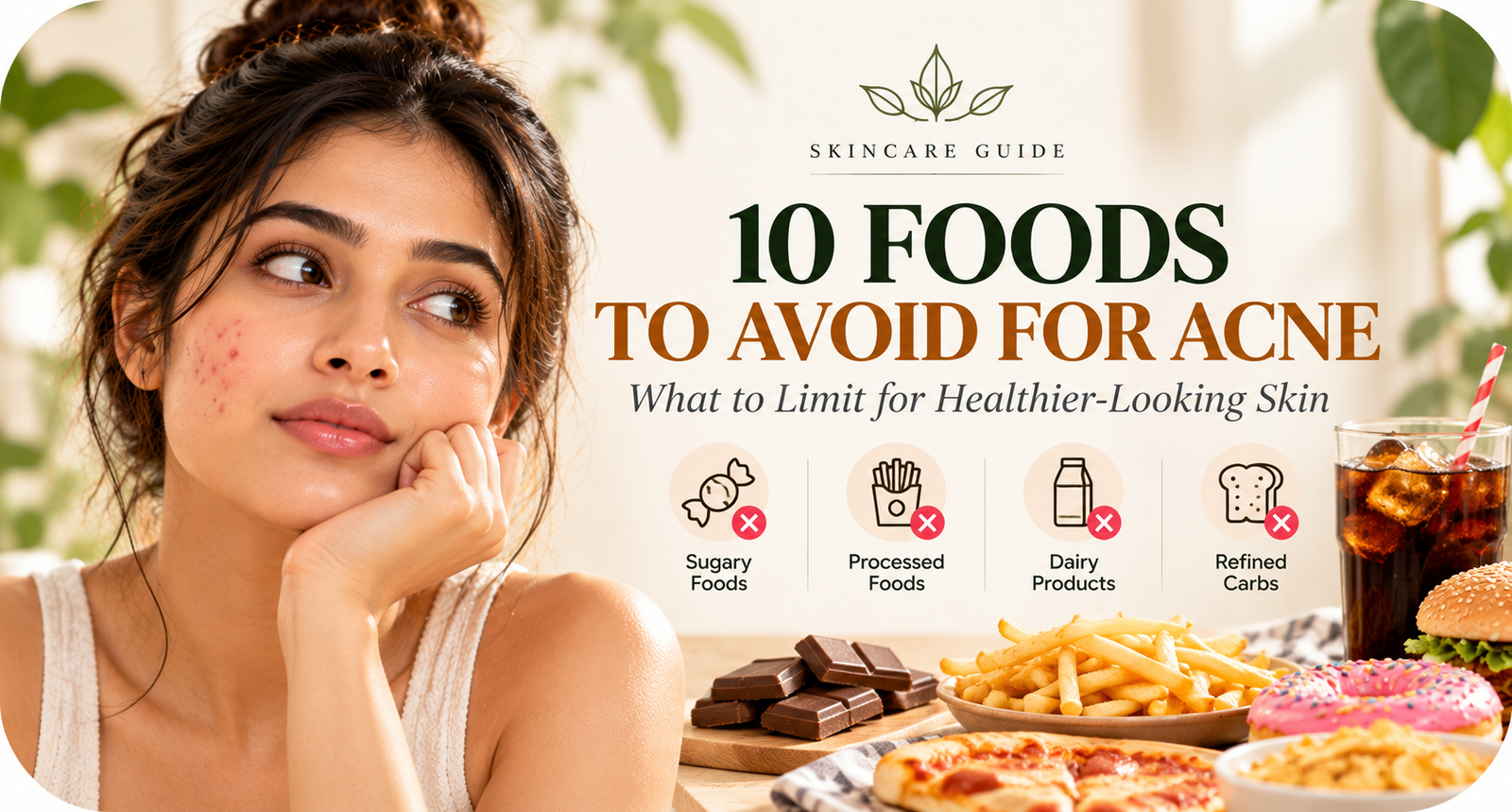
10 Foods to Avoid or Limit for Acne-Prone Skin
Again, the word “avoid” should be interpreted carefully.
These foods are not guaranteed acne triggers for everyone.
Instead, they are foods or food categories that may be worth limiting or monitoring if you have frequent breakouts.
1. Sugary Soft Drinks
Soft drinks, cola, sweetened soda and similar beverages can contain substantial amounts of added sugar.
Because these drinks can cause a rapid increase in blood glucose, they fall into the broader category of high-glycemic dietary choices that researchers have investigated in relation to acne.
The American Academy of Dermatology lists sugary drinks among examples of high-glycemic foods and beverages that may contribute to blood sugar spikes. Some studies suggest that reducing high-glycemic foods may reduce acne in certain people, although the evidence is not conclusive for everyone.
What can you drink instead?
Try:
- Plain water
- Sparkling water without added sugar
- Unsweetened tea
- Infused water
- Unsweetened coconut water in appropriate portions
You do not have to completely eliminate every sweetened drink overnight.
Start by reducing how frequently you consume them.
2. Candy and Other High-Sugar Sweets
Candy, gummies, sweetened chocolates and other highly sugary snacks can contribute a substantial amount of rapidly absorbed carbohydrates.
If you regularly snack on sweets throughout the day, reducing their frequency may be a reasonable dietary experiment if you are concerned about acne.
The important point is not to assume that sugar directly causes every pimple.
Instead, think about your overall dietary pattern.
If a large portion of your daily calories comes from sugary snacks and refined carbohydrates, replacing some of these foods with higher-fibre options may be a more useful approach than simply banning one particular sweet.
Better snack options
Consider:
- Fresh fruit
- Unsweetened yoghurt if tolerated
- Nuts
- Seeds
- Roasted chickpeas
- Whole-grain snacks
- Vegetables with a suitable dip
A balanced snack can also help reduce the tendency to constantly reach for sugary foods.
3. Doughnuts, Cakes and Pastries
Doughnuts, cakes, pastries and similar bakery products often combine refined carbohydrates with added sugars and fats.
Many of these foods fall into a higher-glycemic dietary pattern.
The AAD identifies doughnuts and pastries among examples of foods that can raise blood sugar quickly.
Does eating one pastry mean you will develop acne?
No.
But if these foods are a regular part of your diet, reducing their frequency may be worth considering.
Try this instead
Instead of making pastries an everyday breakfast, you could choose:
- Oats
- Eggs
- Whole-grain toast
- Fresh fruit
- Unsweetened yoghurt
- Beans or lentils
- Other balanced breakfast options
The goal is not perfection.
The goal is a more balanced eating pattern.
4. White Bread and Other Refined Grains
White bread is made from refined flour and can have a relatively high glycemic impact compared with less-refined, higher-fibre alternatives.
The AAD includes white bread among examples of high-glycemic foods that may worsen acne in some people.
If you eat white bread frequently, consider experimenting with higher-fibre alternatives.
Possible alternatives
- Whole-grain bread
- Multigrain bread
- Oats
- Whole grains
- Legumes
- Vegetables
- Other minimally processed carbohydrate sources
You do not need to completely eliminate carbohydrates.
Carbohydrates can be part of a healthy diet.
The focus is on the quality and overall pattern of your carbohydrate intake.
5. Sugary Breakfast Cereals
Some breakfast cereals are marketed as healthy but can contain significant amounts of added sugar.
Cereals such as corn flakes and other refined breakfast products are included among examples of high-glycemic foods discussed by the AAD.
If your breakfast consists primarily of a sweetened cereal and a sugary beverage, you may be starting the day with a relatively high-glycemic meal.
Better breakfast combinations
Consider combining:
Protein + fibre + whole-food carbohydrates
For example:
- Oats with nuts and fruit
- Vegetable poha with a protein source
- Besan chilla with vegetables
- Eggs with whole-grain toast
- Unsweetened yoghurt with fruit and seeds
The ideal choice depends on your dietary preferences and nutritional needs.
6. French Fries and Potato Chips
French fries and potato chips are frequently discussed in relation to acne, particularly because potatoes and other refined or processed carbohydrate foods can contribute to a high-glycemic dietary pattern.
The AAD lists potato chips, white potatoes and fries among foods that can raise blood sugar quickly.
This does not mean potatoes are automatically bad for your skin.
The bigger issue is often the overall form, preparation and quantity.
A boiled or baked potato eaten as part of a balanced meal is very different from regularly consuming large portions of deep-fried fries.
Better choices
Try:
- Baked potatoes
- Roasted vegetables
- Sweet potatoes
- Homemade snacks with less added oil
- Balanced meals containing vegetables and protein
7. Large Amounts of White Rice
Rice is an important staple for millions of people, including across India.
You do not need to stop eating rice because you have acne.
However, large portions of refined white rice can contribute significantly to the glycemic load of a meal.
The AAD lists white rice among examples of high-glycemic foods.
Instead of eliminating rice, consider portion size and what you eat with it.
For example:
Rice + dal + vegetables + protein
is a more balanced meal than a very large portion of rice eaten by itself.
Practical approach
You can experiment with:
- Smaller rice portions
- More vegetables
- Dal or beans
- Other protein sources
- Higher-fibre grains where suitable
You do not have to give up a culturally important staple to build an acne-conscious diet.
8. Cow’s Milk
Milk is one of the more complicated foods when discussing acne.
Some observational studies have found an association between cow’s milk consumption and acne, particularly with certain types of milk. However, this does not prove that milk causes acne in every person.
The AAD notes that studies have associated whole, low-fat and skim cow’s milk with acne, while also emphasizing that more research is needed. It also notes that studies have not established the same association for yoghurt or cheese.
A systematic review similarly found that the evidence linking dairy and acne is mixed and may depend on population, sex, ethnicity and dietary patterns.
Therefore, you should not automatically remove all dairy products from your diet.
What can you do?
If you suspect milk may be associated with your breakouts, keep a food and skin diary.
Track:
- How much milk you consume
- How frequently you consume it
- Changes in your skin
- Other major dietary changes
- Your skincare routine
Discuss significant dietary changes with a healthcare professional, especially if you depend on dairy for important nutrients.
9. Milkshakes and Sweetened Dairy Drinks
Milkshakes deserve separate attention because they combine two factors that can be relevant when discussing acne:
Milk + a high-sugar/high-glycemic formulation
A milkshake can contain milk, ice cream, syrups, sugar and other sweeteners.
The AAD includes milkshakes among examples of high-glycemic foods and beverages.
If you frequently consume large sweetened milkshakes, reducing them may be a more practical dietary change than eliminating every dairy product.
Try instead
Consider:
- Unsweetened milk
- Plain yoghurt
- Fruit-based smoothies without added sugar
- Unsweetened beverages
- Water
Again, moderation is more realistic than assuming that one food is responsible for acne.
Staff picks
-
De-Tan Face Cleanser with Vitamin C, Salicylic Acid & Charcoal
Original price was: ₹599.00.₹540.00Current price is: ₹540.00. -
Rose Water Face Mist Spray | Natural Toner for Face, Skin & Hair | Hydrating, Refreshing & Alcohol-Free
Original price was: ₹199.00.₹180.00Current price is: ₹180.00.


10. Highly Processed Fast Foods
Fast food can include combinations of refined carbohydrates, high amounts of saturated fat, added salt and highly processed ingredients.
Examples include:
- Burgers
- Pizza
- Fried snacks
- Fried chicken
- Packaged fries
- Highly processed snack foods
Research on dietary patterns suggests that high-glycemic diets may be associated with acne, while reviews have also investigated high-fat and Western-style dietary patterns. However, the evidence is not strong enough to say that every fast-food meal causes acne.
If fast food is an occasional meal, there is no reason to panic.
If it forms a large part of your regular diet, replacing some meals with minimally processed foods may be a sensible step for overall health as well as potentially supporting healthier skin.
What About Chocolate?
Chocolate is one of the most frequently blamed foods for acne.
But the answer is not simply “chocolate causes pimples.”
Research has explored chocolate and acne, but evidence is not strong enough to say that chocolate universally causes acne.
A major issue is that many chocolate products also contain large amounts of sugar and other ingredients.
If you notice a consistent relationship between a particular chocolate product and your breakouts, you can monitor your intake and discuss the pattern with a healthcare professional.
You do not necessarily need to eliminate chocolate completely.
The overall dietary pattern matters more than fear of one particular food.
What About Pizza?
Pizza is another food that frequently gets blamed for acne.
But pizza itself is not a scientifically established universal acne trigger.
Depending on the ingredients, pizza may contain:
- Refined flour
- Cheese
- Processed meat
- Added fats
- High amounts of sodium
The combination can make some types of pizza relatively energy-dense and high in refined carbohydrates.
If you eat pizza frequently, reducing portion size and frequency while adding vegetables and other balanced foods may be a reasonable approach.
There is no need to believe that eating one slice automatically causes a breakout.
What About Ice Cream?
Ice cream combines dairy and added sugar, so it is often discussed when people talk about acne and diet.
The evidence is not strong enough to say that ice cream causes acne in everyone.
If you notice that your skin consistently worsens after eating a particular food, you can track that pattern rather than immediately eliminating every food you enjoy.
Remember that an individual’s response can be different from population-level research findings.
Is All Sugar Bad for Acne?
No.
This is an important distinction.
The concern in acne research is often related to glycemic index and glycemic load, not simply the presence of sugar in every food.
A whole fruit contains naturally occurring sugar but also provides fibre, water and micronutrients.
A sugary soft drink provides sugar in a very different form.
Therefore, saying:
“Fruit contains sugar, so fruit causes acne”
would be an oversimplification.
A balanced diet should include a variety of nutrient-rich foods.
What Is a Low-Glycemic Diet?
A low-glycemic diet emphasizes foods that generally cause a slower rise in blood glucose compared with high-glycemic foods.
Examples can include:
- Most non-starchy vegetables
- Beans
- Lentils
- Some whole grains
- Some fresh fruits
- Steel-cut oats
The AAD reports that several small studies have found fewer acne lesions in people following lower-glycemic diets, although other research has not found the same relationship and more research is needed.
A systematic review found that high-glycemic intake had a modest association with acne and that randomized controlled trials provided some support for lower-glycemic diets, but the evidence is still not sufficient to create a universal acne diet.
What Should You Eat for Healthier-Looking Skin?
Instead of focusing only on foods to remove, think about what you can add.
A balanced eating pattern can include:
Vegetables
Include a variety of colourful vegetables in your meals.
Fruits
Choose whole fruits rather than relying heavily on fruit juices or sugary fruit drinks.
Legumes
Dal, beans and chickpeas can provide fibre and plant-based protein.
Whole Grains
Choose higher-fibre grains where appropriate.
Nuts and Seeds
These can provide healthy fats and other nutrients.
Protein Sources
Include protein sources appropriate for your dietary preferences.
Water
Stay adequately hydrated throughout the day.
The objective is not to create a restrictive “acne diet.”
It is to build a balanced eating pattern that supports your overall health.
How to Find Out If a Food Is Triggering Your Acne
If you think a particular food is affecting your skin, do not eliminate ten foods at once.
You will not know which one was responsible.
Instead, try a structured approach.
Step 1: Keep a Food and Skin Diary
Record:
- What you eat
- How much you eat
- Your skincare routine
- New products
- Breakouts
- Stress
- Sleep
- Other major lifestyle changes
Step 2: Look for Patterns
One breakout after eating a particular food does not prove causation.
Look for repeated patterns over time.
Step 3: Change One Major Variable at a Time
If you remove five foods simultaneously, you cannot easily identify which change mattered.
Step 4: Avoid Extreme Restriction
Do not eliminate important food groups without considering nutrition.
If you want to make a major dietary change, particularly for a child, teenager or someone with specific nutritional needs, consult an appropriate healthcare professional.
Can Skincare Help If Diet Is Affecting Your Acne?
Yes.
Diet is only one potential factor.
The AAD’s acne guidelines recommend evidence-based treatments such as benzoyl peroxide, topical retinoids and other topical therapies. Salicylic acid and azelaic acid are also included among recommended acne treatment options.
That means changing your diet alone may not be enough to manage acne.
A simple skincare routine can include:
Cleanser → Acne treatment when appropriate → Moisturiser → Sunscreen
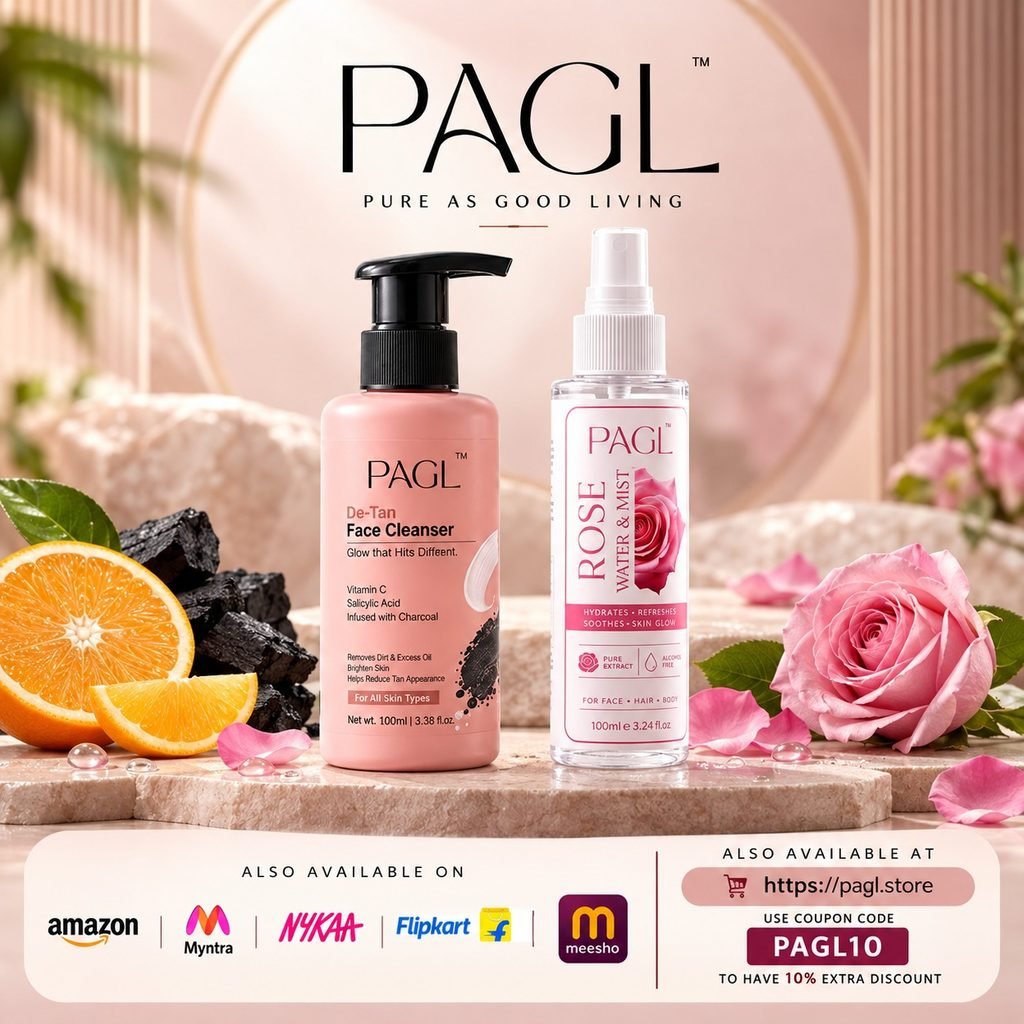
If you are using a cleanser containing salicylic acid, you can consider the PAGL De-Tan Face Cleanser with Vitamin C and Salicylic Acid as one cleansing option.
Remember that a cleanser is not a complete acne treatment.
Can Rose Water Be Used With an Acne Skincare Routine?
A face mist can be used as an optional refreshing step, depending on your skin and the formulation.
For example:
Cleanser → PAGL Rose Water Face Mist → Moisturiser
The PAGL Rose Water Face Mist can be used as a refreshing step after cleansing.
However, rose water should not be presented as a cure for acne.
If you have active acne, focus on appropriate acne treatment and gentle skincare.
A Simple Acne-Friendly Daily Routine
You do not need a complicated skincare routine.
Morning
Step 1: Cleanse
Use a gentle cleanser suitable for your skin.
The PAGL De-Tan Face Cleanser can be incorporated into a cleansing routine if it suits your skin.
Step 2: Hydrate
If you enjoy using a face mist, apply the PAGL Rose Water Face Mist after cleansing.
Step 3: Moisturise
Use a moisturiser that is comfortable for your skin.
Step 4: Sunscreen
Apply broad-spectrum sunscreen with SPF 30 or higher when appropriate.
Night
Step 1: Cleanse
Remove sunscreen, sweat, oil and other products.
Step 2: Acne Treatment
Use an evidence-based acne treatment if appropriate.
Step 3: Moisturise
Use a suitable moisturiser to help maintain skin comfort.
Common Diet Mistakes People Make When They Have Acne
Mistake 1: Eliminating Everything
Removing dairy, gluten, sugar, rice, chocolate and every processed food at the same time can create an unnecessarily restrictive diet.
There is no strong evidence that every person with acne needs to follow such a diet.
Mistake 2: Blaming One Food
One pimple after eating chocolate does not prove that chocolate caused it.
Mistake 3: Ignoring Overall Diet Quality
Focusing on one ingredient while eating a highly processed diet overall misses the bigger picture.
Mistake 4: Expecting Diet to Cure Acne
Diet may influence acne for some people, but current evidence does not support treating acne through diet alone. The 2024 AAD guidelines found insufficient evidence to make specific dietary recommendations as acne treatment.
Mistake 5: Ignoring Skincare and Treatment
If you have persistent acne, appropriate skincare and evidence-based treatment are important.
When Should You See a Dermatologist?
Dietary changes are not a substitute for professional acne treatment when you have moderate or severe acne.
Consider seeing a dermatologist if:
- You have deep or painful acne
- You have nodules or cysts
- Your acne is leaving scars
- Breakouts are persistent
- Over-the-counter products are not helping
- Acne is affecting your confidence or wellbeing
- You are unsure whether the bumps are actually acne
A dermatologist can identify the type and severity of your acne and recommend an appropriate treatment plan.
Frequently Asked Questions
1. What are the 10 foods to avoid for acne?
There is no scientifically established list of 10 foods that everyone with acne must avoid. Foods worth limiting or monitoring include sugary drinks, candy, pastries, white bread, sugary cereals, fries, chips, large portions of refined carbohydrates, cow’s milk and highly processed fast foods. However, individual responses vary and current guidelines do not recommend a universal acne diet.
2. What foods are most strongly linked with acne?
High-glycemic foods have some of the stronger evidence for a possible association with acne. Dairy, particularly cow’s milk, has also been studied, but the evidence is mixed.
3. Should I stop eating chocolate if I have acne?
Not necessarily. Chocolate is often blamed for acne, but the evidence is not strong enough to say that chocolate universally causes breakouts. Pay attention to your own pattern rather than automatically eliminating it.
4. Does milk cause pimples?
Some studies have found an association between cow’s milk consumption and acne, but the evidence is mixed and does not prove that milk causes acne in every person.
5. Does sugar cause acne?
High-glycemic dietary patterns may be associated with acne in some people. However, saying that every sugary food directly causes acne would be an oversimplification.
6. Is rice bad for acne?
Rice is not automatically bad for acne. White rice can contribute to a higher-glycemic meal, particularly in large portions. Consider portion size and combine rice with vegetables, legumes and appropriate protein sources.
7. Should I stop eating dairy for acne?
Not necessarily. Evidence regarding dairy and acne is mixed. If you suspect dairy is affecting your skin, track your symptoms and discuss major dietary changes with a healthcare professional.
8. Can changing my diet cure acne?
Diet may influence acne, but current evidence does not support diet as a standalone cure. Evidence-based skincare and medical treatment may also be necessary.
9. Can I use a salicylic acid cleanser if I have acne?
Salicylic acid is a recommended topical acne treatment ingredient that can help unclog pores. However, whether a particular cleanser is suitable depends on your skin and the rest of your routine.

10. Can rose water remove acne?
Rose water should not be considered an acne treatment. A face mist can be used as a refreshing skincare step, but persistent acne should be managed with appropriate acne treatment.
11. What should I eat instead of high-sugar snacks?
Consider whole fruits, vegetables, nuts, seeds, legumes, oats and other minimally processed foods. The goal is a balanced diet rather than extreme restriction.
12. How long should I monitor my diet for acne triggers?
There is no universally established timeframe. Look for repeated patterns rather than reacting to a single breakout. A food and skin diary can help you identify possible associations.
Final Thoughts
Searching for the 10 foods to avoid for acne can make it seem as though clearer skin simply requires eliminating a list of foods.
The reality is more nuanced.
Acne is influenced by many factors, and diet is only one potential piece of the puzzle.
Research suggests that high-glycemic dietary patterns may worsen acne in some people, while the relationship between dairy and acne is less certain. Current dermatology guidelines also do not recommend a specific acne diet for everyone because the evidence remains insufficient.
Instead of completely banning foods, start by improving your overall eating pattern.
Reduce frequent consumption of highly processed, sugary and high-glycemic foods.
Choose more vegetables, fruits, legumes, whole-food carbohydrates and balanced meals.
Pay attention to your own skin.
If you repeatedly notice that a particular food seems to coincide with breakouts, keep a food and skin diary and discuss the pattern with a healthcare professional.
At the same time, do not forget your skincare routine.
A suitable cleanser, appropriate acne treatment, moisturiser and sunscreen can all play important roles in managing acne-prone skin.
For cleansing, you can explore the PAGL De-Tan Face Cleanser with Vitamin C and Salicylic Acid if it suits your skin.
For an optional refreshing step, the PAGL Rose Water Face Mist can be incorporated into your routine.
But remember:
Healthy skin is not created by one food, one product or one skincare trick.
It is usually the result of consistent skincare, sensible nutrition, sun protection, adequate sleep and appropriate treatment when necessary.
If your acne is painful, severe, persistent or leaving scars, a dermatologist can help you find a treatment plan that is appropriate for your skin.












Leave a Reply