
Choosing the right sunscreen can feel confusing.
You may see products labelled SPF 30, SPF 50, PA+++, PA++++, broad-spectrum, water-resistant, gel, cream, matte, tinted and many other variations. With so many options available, it is easy to wonder which sunscreen is actually suitable for your skin.
For people living in India, sunscreen can be an especially important part of a daytime skincare routine. Regular exposure to sunlight can contribute to sunburn, tanning, pigmentation and premature visible skin ageing. Dermatologists generally recommend choosing a sunscreen that provides broad-spectrum protection, has an SPF of 30 or higher and is water resistant.
But choosing the best sunscreen is not simply about buying the product with the biggest SPF number.
Your skin type, daily routine, amount of outdoor exposure, sweating, tanning concerns and preferred texture all matter.
In this guide, we will explain how to choose the best sunscreen for Indian skin, what SPF and PA mean, whether SPF 30 or SPF 50 is better, how much sunscreen to apply, when to reapply it, how sunscreen relates to tanning and the common mistakes people make.
Why Is Sunscreen Important for Indian Skin?
Sunlight contains ultraviolet radiation, including UVA and UVB rays.
UVB is strongly associated with sunburn, while UVA contributes to premature visible skin ageing. Broad-spectrum sunscreen is designed to provide protection against both UVA and UVB radiation.
This means sunscreen is about more than simply preventing your skin from becoming darker after spending time outdoors.
Consistent sun protection can help reduce the effects of UV exposure and support healthier-looking skin over time.
This becomes particularly relevant if you regularly:
- Travel to work or college
- Ride a bike or scooter
- Walk outdoors
- Exercise outside
- Work outdoors
- Spend time at the beach or swimming pool
- Travel frequently
- Spend several hours in direct sunlight
Sunscreen is only one part of sun protection. Seeking shade and using protective clothing, sunglasses and hats can provide additional protection.
What Does SPF Mean?
SPF stands for Sun Protection Factor.
It primarily describes the level of protection a sunscreen provides against UVB-related sunburn.
One common misunderstanding is that SPF tells you exactly how many hours you can stay in the sun.
It does not.
For example, SPF 50 does not mean that you can stay outside for 50 times longer than you could without sunscreen.
The American Academy of Dermatology recommends using sunscreen with an SPF of 30 or higher. Higher SPF numbers provide somewhat greater UVB protection, but no sunscreen blocks 100% of UVB rays.
This is also why reapplication remains important.
SPF 30 vs SPF 50: Which Is Better?
Both SPF 30 and SPF 50 can be useful choices.
Dermatologists generally recommend an SPF of 30 or higher for everyday sun protection.
SPF 50 provides a higher labelled level of UVB protection than SPF 30 under standardized testing conditions.
However, SPF 50 does not mean you can:
- Stay outdoors all day without reapplying
- Apply a very small amount
- Ignore shade
- Skip protective clothing
- Forget about UVA protection
In real life, application matters enormously.
A high-SPF sunscreen applied too sparingly may not provide the level of protection you expect from the label.
So instead of asking only:
“Should I buy SPF 30 or SPF 50?”
also ask:
“Will I apply enough of it and use it consistently?”
What Does PA+++ or PA++++ Mean?
Many sunscreens available in India use a PA rating alongside SPF.
The PA system is used to communicate UVA protection.
You may see:
- PA+
- PA++
- PA+++
- PA++++
In general, more plus signs indicate a higher level of UVA protection within the PA rating system.
This matters because SPF mainly communicates UVB protection, while UVA is also important when considering long-term sun exposure and visible signs of photoageing.
Therefore, do not judge a sunscreen only by its SPF number.
Look for a product that provides broad-spectrum protection or clearly communicates UVA and UVB protection.
What Is Broad-Spectrum Sunscreen?
Broad-spectrum sunscreen protects against both UVA and UVB radiation.
When choosing a sunscreen, this is one of the most useful things to look for on the label.
The American Academy of Dermatology recommends choosing sunscreen that provides broad-spectrum protection, has SPF 30 or higher and is water resistant.
So, if you are comparing two products, do not simply choose the one with the larger SPF number.
Check the complete label.
A practical checklist is:
Broad spectrum + SPF 30 or higher + suitable for your skin + appropriate for your lifestyle
How to Choose the Best Sunscreen for Indian Skin Type
There is no single sunscreen that is perfect for everyone.
Your skin type can influence which texture feels comfortable enough to use every day.
Sunscreen for Oily Skin
If your skin becomes oily quickly, you may prefer a lightweight gel, fluid or non-greasy sunscreen.
A comfortable texture can make it easier to apply an adequate amount without feeling excessively heavy.
Look for products marketed for oily or acne-prone skin, but do not rely on marketing claims alone.
Pay attention to the formulation and how your skin responds.
If your sunscreen makes your face feel excessively greasy and uncomfortable, you may be less likely to use it consistently.
Sunscreen for Dry Skin
People with dry skin may prefer a cream or moisturising sunscreen.
A comfortable, hydrating texture can make sunscreen easier to incorporate into your morning routine.
You may also use a moisturiser before sunscreen if your skin needs additional hydration.
However, a heavier texture is not automatically better.
The right sunscreen is one that provides appropriate protection while working comfortably with your skin.
Sunscreen for Combination Skin
Combination skin can be challenging because some areas may become oily while others feel dry.
A lightweight lotion, fluid or gel-cream sunscreen may be a practical option.
The rest of your skincare routine can also be adjusted according to different areas of your face.
Sunscreen for Acne-Prone Skin
If you frequently experience breakouts, you may prefer a lightweight sunscreen formulated for acne-prone skin.
Heavy or greasy formulas may feel uncomfortable for some people.
However, acne-prone skin varies significantly from person to person.
If you are using prescription acne treatments or experiencing persistent breakouts, speak with a dermatologist before making major changes to your skincare routine.
Sunscreen for Sensitive Skin
Sensitive skin may react to certain ingredients or formulations.
If your skin is easily irritated, introduce new sunscreen carefully.
Avoid repeatedly switching products.
If a sunscreen causes persistent burning, redness, itching or irritation, stop using it and seek professional medical advice if the symptoms continue.
How Much Sunscreen Should You Apply?
One of the most common sunscreen mistakes is using too little.
The protection stated on a sunscreen label is based on standardized application amounts. If you apply substantially less, you may not receive the expected level of protection.
The American Academy of Dermatology advises approximately one ounce of sunscreen for the exposed skin of an average adult’s body. For the face, its guidance gives approximately one teaspoon as a minimum facial amount, although practical application methods can vary.
A commonly used practical approach for the face is the two-finger method, where sunscreen is dispensed along the length of two fingers.
Your actual requirement can vary depending on your face size and the product formulation, so follow the product label when it provides specific instructions.
Do not forget:
- Face
- Ears
- Neck
- Hairline
- Jawline
- Tops of hands
- Other exposed skin
The neck is particularly easy to forget.
You may have a detailed skincare routine for your face while leaving your neck completely unprotected.
When Should You Apply Sunscreen?
Apply sunscreen before going outdoors.
The American Academy of Dermatology recommends applying sunscreen approximately 15 minutes before going outside so that it can form an effective protective layer before sun exposure.
A simple morning routine can therefore look like:
Cleanser → Hydrating step → Moisturiser → Sunscreen
If you use makeup, sunscreen should generally be applied before makeup.
Give your skincare products time to settle if necessary so that you can apply each layer evenly.
How Often Should You Reapply Sunscreen?
Applying sunscreen once in the morning is not necessarily enough if you remain outdoors for an extended period.
Dermatologists recommend reapplying sunscreen approximately every two hours when outdoors and after swimming or sweating.
You may need to reapply when:
- You have been outdoors for an extended period
- You are exercising outside
- You are sweating heavily
- You go swimming
- You towel your skin
- You wipe your face repeatedly
- You spend prolonged time in direct sunlight
Water-resistant sunscreen can provide protection during swimming or sweating for a limited period, but it still needs to be reapplied according to the product’s instructions. No sunscreen should be treated as permanently waterproof or sweatproof.
Is SPF 50 Necessary for Indian Summers?
Not necessarily for every person.
SPF 30 or higher is a useful dermatologist-recommended baseline. However, people who spend substantial amounts of time outdoors may prefer SPF 50.
For example, if you:
- Ride a two-wheeler every day
- Work outdoors
- Travel frequently
- Exercise outside
- Spend hours in direct sunlight
you may want to pay particularly close attention to your sunscreen’s SPF, broad-spectrum protection, application and reapplication.
But remember:
SPF 50 does not provide all-day protection.
A higher SPF does not give you permission to stay outside longer without reapplying.
Can Sunscreen Prevent Tanning?
Sunscreen can help reduce UV exposure, which is important when your goal is to prevent additional tanning.
However, no sunscreen blocks every bit of UV radiation.
A tan is a response to UV exposure and is a sign that the skin has been exposed to UV damage. The AAD notes that there is no completely safe way to tan through UV exposure.
If tanning is a concern, focus on prevention:
Sunscreen + shade + protective clothing + sensible sun exposure
Do not depend on a cleanser, scrub or face pack alone to compensate for ongoing sun exposure.
If you are already dealing with tanning or dull-looking skin, maintaining a consistent routine can help support your skin while you reduce additional UV exposure.
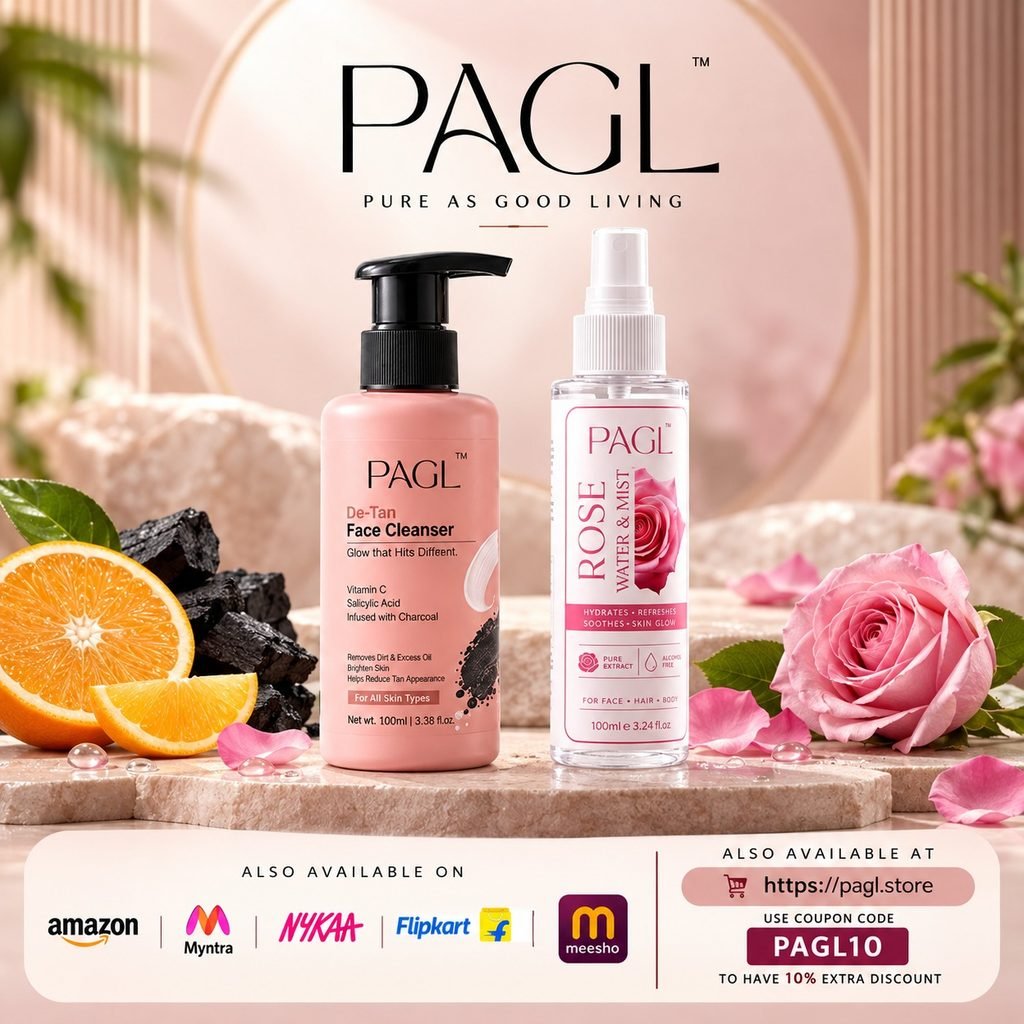
For cleansing, you can explore the PAGL De-Tan Face Cleanser with Vitamin C and Salicylic Acid, while continuing to prioritize daily sun protection.
Sunscreen and Dark Spots
Sun exposure can be particularly frustrating if you are concerned about pigmentation or dark spots.
UV exposure can contribute to visible pigmentation, and visible light can also worsen hyperpigmentation in some people, particularly those with darker skin tones. The AAD notes that tinted sunscreens containing iron oxide may provide additional protection against visible light.
If pigmentation is your main concern, sunscreen should be treated as a foundational part of your skincare routine.
However, persistent pigmentation should not automatically be assumed to be caused by sun exposure.
If dark patches are persistent, spreading, changing or concerning you, consult a qualified dermatologist.
Can Sunscreen Help With Premature Skin Ageing?
Yes, sun protection is an important part of protecting skin from premature visible ageing caused by UV exposure.
Unprotected UV exposure can contribute to visible changes such as wrinkles and age spots over time. The AAD recommends regular sun protection as part of reducing premature skin ageing.
This is one reason sunscreen should not be viewed only as a summer product.
UV exposure occurs throughout the year.
Common Sunscreen Mistakes You Should Avoid
1. Applying Too Little
This is one of the most common problems.
If you dislike the texture and apply only a tiny amount, you may not receive the protection indicated by the SPF label.
Choose a texture you can comfortably apply in an adequate amount.
2. Applying Sunscreen Only on Beach Days
Sunscreen is not only for holidays.
Walking to work, riding a scooter, commuting, exercising or spending time outside can all involve UV exposure.
Make sun protection part of your regular daytime routine when appropriate.
3. Forgetting Your Neck
Your face may be protected while your neck remains exposed.
Apply sunscreen to all exposed areas.
4. Assuming SPF 50 Means All-Day Protection
It does not.
Sunscreen wears off over time, especially with sweating, swimming, rubbing and towel drying.
Reapply approximately every two hours when outdoors and after swimming or sweating.
5. Choosing Only Based on SPF
SPF is important, but it is not the only factor.
Consider:
- Broad-spectrum protection
- SPF
- Water resistance
- Skin type
- Texture
- Outdoor exposure
- Application requirements
- Whether you can use it consistently
6. Skipping Sunscreen on Cloudy Days
Cloudy weather does not mean there is no UV exposure.
The AAD recommends sun protection when outdoors even on cloudy days.
7. Using Sunscreen as Your Only Sun Protection
Sunscreen is important, but it should not be your only strategy.
Whenever practical, combine it with:
- Shade
- Hats
- Sunglasses
- Protective clothing
- Limiting prolonged direct exposure
Can You Use Vitamin C With Sunscreen?
Yes.
Vitamin C and sunscreen can be included in the same daytime skincare routine.
For example:
Cleanser → Vitamin C product → Moisturiser → Sunscreen
However, you do not need a complicated routine.
If you are new to active skincare ingredients, introduce products gradually.
If your routine includes a cleanser containing vitamin C and salicylic acid, remember that a cleanser and sunscreen perform completely different functions.
For example, the PAGL De-Tan Face Cleanser is designed as a cleansing step, while sunscreen is the product that provides UV protection.
Cleanser cleans. Sunscreen protects.
Neither should be treated as a replacement for the other.
Where Does Rose Water Fit Into a Sunscreen Routine?
Rose water can be included as a refreshing step in a skincare routine.
For example:
Cleanser → Rose Water Face Mist → Moisturiser → Sunscreen
If you enjoy using a face mist, the PAGL Rose Water Face Mist can be incorporated after cleansing and before the rest of your daytime skincare routine.
A face mist can provide a refreshing skincare step, particularly during hot weather.
However, rose water is not a replacement for sunscreen.
Similarly, sunscreen is not a replacement for cleansing.
Each product has a different role.
Featured Products
-
De-Tan Face Cleanser with Vitamin C, Salicylic Acid & Charcoal
Original price was: ₹599.00.₹540.00Current price is: ₹540.00. -
Rose Water Face Mist Spray | Natural Toner for Face, Skin & Hair | Hydrating, Refreshing & Alcohol-Free
Original price was: ₹199.00.₹180.00Current price is: ₹180.00.


A Simple Sunscreen Routine for Indian Skin
You do not need a complicated 10-step routine.
Morning
Step 1: Cleanse
Use a cleanser that suits your skin type.
If you are looking for a cleanser focused on dull-looking or tanned skin concerns, you can explore the PAGL De-Tan Face Cleanser as one option.
Step 2: Hydrate
If you enjoy using a face mist, apply your PAGL Rose Water Face Mist after cleansing.
Step 3: Moisturise
Choose a moisturiser according to your skin type and current skincare needs.
Step 4: Sunscreen
Apply an adequate amount of broad-spectrum sunscreen with SPF 30 or higher.
Step 5: Reapply
If you remain outdoors, reapply approximately every two hours and after swimming or sweating.
How to Choose Sunscreen: A Quick Buying Checklist
Before buying a sunscreen, ask yourself these questions.
1. Does it provide broad-spectrum protection?
Look for protection against both UVA and UVB.
2. Is the SPF 30 or higher?
Dermatologists recommend SPF 30 or higher for regular sun protection.
3. Does it suit my skin type?
Choose a texture that feels comfortable and works with your skin.
4. Will I actually use it every day?
Consistency matters.
If you hate the texture, feel excessively greasy or experience irritation, you may stop using it.
5. Do I need water resistance?
If you swim, exercise outdoors or sweat heavily, water resistance may be useful.
Always follow the product label for reapplication instructions.
6. Does it suit my lifestyle?
Someone working primarily indoors may have a different level of sun exposure from someone who spends several hours outdoors every day.
Best Sunscreen for Indian Skin: What Should You Actually Look For?
Instead of searching for one sunscreen that is supposedly perfect for every Indian, focus on finding one that fits your skin and your lifestyle.
A useful starting checklist is:
- Broad-spectrum protection
- SPF 30 or higher
- A comfortable texture
- Suitable for your skin type
- Water resistance if relevant
- Adequate application
- Reapplication during prolonged outdoor exposure
- A formulation you can consistently use
The best sunscreen is not necessarily the most expensive one.
It is the one that provides appropriate protection and that you are willing to use correctly and consistently.
How to Prevent Tanning Along With Your Skincare Routine
If tanning is one of your main skincare concerns, prevention should come first.
A practical routine can look like:
Morning:
Cleanser → Hydration → Moisturiser → Sunscreen
During outdoor exposure:
Sunscreen reapplication → Shade → Hat or protective clothing when possible
Evening:
Cleanser → Treatment if appropriate → Moisturiser
You can also use skincare products targeted at your specific concerns.
For example, after cleansing, a refreshing product such as the PAGL Rose Water Face Mist for face and skin can be a simple addition to your routine.
The important point is that no cleanser or mist can replace sun protection.
Frequently Asked Questions
1. What is the best sunscreen for Indian skin?
There is no single sunscreen that is best for everyone. Look for broad-spectrum protection, SPF 30 or higher and a texture suitable for your skin type and lifestyle. Water resistance can be useful if you swim or sweat heavily.
2. Is SPF 30 enough for Indian skin?
SPF 30 is a dermatologist-recommended minimum for many everyday situations. People with substantial outdoor exposure may prefer SPF 50. Regardless of SPF, apply enough sunscreen and reapply when necessary.
3. Is SPF 50 better than SPF 30?
SPF 50 provides a higher labelled level of UVB protection than SPF 30, but it does not provide all-day protection. Both need to be applied correctly and reapplied when appropriate.
4. What is better, PA+++ or PA++++?
Within the PA rating system, more plus signs generally indicate a higher level of UVA protection. However, you should consider the complete sunscreen label rather than choosing solely based on PA.
5. Can sunscreen prevent tanning?
Sunscreen can reduce UV exposure and therefore help reduce additional tanning, but it cannot block all UV radiation. Combining sunscreen with shade and protective clothing provides more comprehensive sun protection.
6. How much sunscreen should I apply to my face?
Use an adequate amount according to the product instructions. The AAD recommends approximately one teaspoon as a minimum facial amount in its consumer guidance, while many people use the two-finger method as a practical approximation.
7. How often should I reapply sunscreen?
When outdoors, dermatologists generally recommend reapplying approximately every two hours and after swimming or sweating. Follow the specific instructions on your sunscreen label.
8. Can I use rose water before sunscreen?
Yes. A rose water face mist can be used as a hydrating or refreshing step before moisturiser and sunscreen.
For example:
Cleanser → PAGL Rose Water Face Mist → Moisturiser → Sunscreen
However, rose water does not provide the same UV protection as sunscreen.
9. Can I use a De-Tan cleanser with sunscreen?
Yes. A cleanser and sunscreen serve different purposes.
You can use the PAGL De-Tan Face Cleanser with Vitamin C and Salicylic Acid as part of your cleansing routine and then apply your daytime skincare products followed by sunscreen.
10. Should I use sunscreen every day?
If you are exposed to daylight and especially when spending time outdoors, daily sun protection is an important skincare habit. The AAD recommends using sunscreen when outdoors, including on cloudy days.
11. Is sunscreen necessary during the monsoon?
Clouds and rain do not mean that all UV exposure disappears. If you are outdoors during the day, continue following appropriate sun-protection habits.
12. Can sunscreen remove existing tan?
Sunscreen primarily helps protect your skin from further UV exposure. It should not be considered a treatment that instantly removes an existing tan.
If you are concerned about tanning, focus on consistent sun protection and a gentle skincare routine.
Final Thoughts
Choosing the best sunscreen for Indian skin does not have to be complicated.
Start with the basics.
Look for broad-spectrum protection, SPF 30 or higher and a formula that suits your skin type and lifestyle.
Then focus on how you use it.
Apply enough sunscreen, cover exposed areas, pay attention to your neck and ears, reapply when necessary and use additional protection such as shade, hats and protective clothing.
If you are building a simple skincare routine, think of it this way:
Cleanse → Hydrate → Moisturise → Protect
Your cleanser helps remove impurities. A hydrating step can refresh your skin. Moisturiser supports your skincare routine. Sunscreen helps protect your skin from UV exposure.
For a simple PAGL-focused routine, you can start with the PAGL De-Tan Face Cleanser as your cleansing step and the PAGL Rose Water Face Mist as an optional refreshing step, followed by your moisturiser and a suitable broad-spectrum sunscreen.
There is no overnight solution for tanning or sun-related skin concerns.
Good skincare is about consistency.
Protect your skin from the sun, choose products according to your actual skin needs and give your routine enough time to work.
And if you have persistent pigmentation, unusual skin changes, severe irritation or another skin concern that does not improve, consult a qualified dermatologist rather than continuously experimenting with new products.








Leave a Reply