

Salon tan removal treatments can be effective, but they are not always practical. They cost money, take time to schedule, and often need to be repeated every few weeks to maintain results. The good news is that most sun tan can be managed just as effectively at home, using the right combination of methods applied consistently.
This guide focuses on exactly that, practical, proven methods you can start using today, without needing a salon appointment or an expensive treatment plan. We will walk through each method, how to use it correctly, and how to combine them into a simple daily routine that actually works.
Why At-Home Tan Removal Works Just as Well
Tan develops as a response to UV exposure, with your skin producing more melanin in its outer layers. Since this process happens in layers of skin that naturally shed and renew over time, most of the work involved in removing tan comes down to supporting that renewal process, not undergoing an intensive procedure.
This is exactly what a good at-home routine does. Through consistent cleansing, gentle exfoliation, brightening ingredients and proper hydration, you can support your skin’s natural fading process just as effectively as many salon treatments, minus the cost and the appointments.
Method 1: Start With the Right Cleanser
The foundation of any at-home tan removal routine is your daily cleanser. A regular face wash is not built to target tan specifically, which is why so many people wash their face daily without seeing much change in their skin tone.
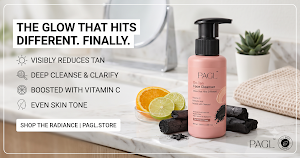
A cleanser formulated with active, tan-targeting ingredients makes a real difference here. The PAGL De-Tan Face Cleanser with Vitamin C, Salicylic Acid and Charcoal combines three ingredients that each play a specific role:
- Vitamin C brightens skin tone and helps reduce the dull, uneven look tan leaves behind
- Salicylic Acid gently exfoliates dead, tanned skin cells and helps unclog pores
- Activated Charcoal draws out dirt, oil and pollution buildup that can make tan look worse
Using this twice daily, morning and evening, gives your at-home routine an active foundation to work from, rather than relying on cleansing alone to do all the work.
Method 2: Gentle Exfoliation for Faster Cell Renewal
Beyond your daily cleanser, gentle exfoliation two to three times a week can help speed up the process of shedding tanned, dead skin cells. This does not need to involve harsh scrubs, a mild exfoliating ingredient used consistently is more effective and safer than aggressive scrubbing done occasionally.
If your cleanser already contains a gentle exfoliant like Salicylic Acid, you may not need a separate scrub at all. Over-exfoliating can actually irritate the skin and slow down recovery, so it is worth being mindful of how much exfoliation your routine already includes.
Method 3: Natural Face Packs for Extra Support
Alongside your regular cleansing routine, natural face packs can offer an additional, gentle boost, especially for mild tanning. A few well-known options include:
- Besan and curd for gentle exfoliation and mild brightening
- Tomato pulp applied directly for 10 to 15 minutes, known for its natural tan-reducing properties
- Aloe vera gel to soothe and mildly brighten sun-exposed skin
- Potato juice or grated potato applied consistently over a few days for its natural lightening effect
These work best as a supplement to your daily cleansing routine, used two to three times a week, rather than as a replacement for it.
Method 4: Tone and Hydrate After Every Cleanse
This is a step that many at-home routines miss entirely. After cleansing, especially with an active-ingredient formula, your skin needs a layer of hydration and pH rebalancing before you move on to moisturizer or sunscreen.
The PAGL Rose Water Face Mist is an alcohol-free toner made from steam-distilled rose water, ideal for this step. A few sprays right after cleansing calm the skin, restore hydration, and prepare it to properly absorb whatever you apply next. It also works well throughout the day as a quick refresh whenever your skin feels tired or sun-exposed.
Method 5: Moisturize to Support Skin Barrier Recovery
Tan removal methods, especially those involving exfoliation, work best when your skin’s moisture barrier stays healthy and supported. A lightweight, non-comedogenic moisturizer applied after your toner locks in hydration and helps prevent the dryness that can come from active-ingredient skincare.
Skipping this step can make your skin feel tight or irritated over time, which can actually slow down how quickly your tan fades, since irritated skin does not renew as efficiently as well-hydrated, balanced skin.
Method 6: Sunscreen, the Step That Protects Your Progress
It is easy to focus entirely on removing existing tan while forgetting that new tan can form just as quickly if your skin is unprotected. Sunscreen applied every morning, and reapplied every few hours during extended outdoor exposure, is what allows all your other efforts to actually show results.
Without this step, you are essentially trying to fade tan while simultaneously adding more of it, which explains why some people feel like their tan never really improves despite using multiple products.

Putting It All Together: A Simple At-Home Routine
Here is how these methods fit together into a practical, easy-to-follow daily routine:
- Morning: Cleanse with the PAGL De-Tan Face Cleanser, tone with the PAGL Rose Water Face Mist, moisturize, then apply sunscreen before heading out.
- Midday: Use the Rose Water Mist as a quick refresh if your skin feels tired or sun-exposed, and reapply sunscreen if you are still outdoors.
- Two to three evenings a week: Add a natural face pack, such as tomato pulp or aloe vera, after cleansing, before applying your toner and moisturizer.
- Every evening: Cleanse again with the De-Tan Face Cleanser, tone and moisturize to support overnight skin recovery.
This routine takes only a few extra minutes compared to a basic skincare habit, but it consistently targets tan from multiple angles rather than relying on one product alone.
How Long Does At-Home Tan Removal Take?
Results depend on how deep the tan is and how consistently the routine is followed. For mild, daily-exposure tan, most people notice fresher, brighter-looking skin within one to two weeks. For deeper or more stubborn tan, such as after an extended vacation, visible improvement typically takes three to six weeks of consistent care.
Consistency matters more than intensity here. Using every method aggressively for a few days and then stopping will not produce better results than a moderate, steady routine followed for several weeks.
Mistakes to Avoid With At-Home Tan Removal
A few common mistakes can slow down progress or even make things worse:
- Over-exfoliating, thinking more scrubbing means faster results, when it often leads to irritation instead
- Skipping sunscreen because you are already using a tan-removal cleanser, undoing much of your progress
- Using very hot water, which strips moisture and can worsen dryness from active ingredients
- Trying too many new products at once, making it hard to tell what is actually working, or what might be irritating your skin
- Expecting results within a day or two, when skin renewal naturally takes one to a few weeks depending on tan depth
When At-Home Methods Are Not Enough
Most sun tan responds well to a consistent at-home routine over several weeks. However, if you notice unusual dark patches, persistent irritation, or no improvement at all after six or more weeks of consistent care, it is worth consulting a dermatologist rather than continuing to rely solely on home methods. This helps rule out other causes of pigmentation that may need a different treatment approach.
Building This Into a Long-Term Habit
The biggest advantage of at-home tan removal is that it does not have to be a one-time effort. Unlike salon treatments that require scheduling and repeat visits, a simple daily routine using the right cleanser, toner and sunscreen can be maintained indefinitely, keeping tan and dullness consistently in check rather than dealing with it reactively every few months.
You can explore more products to round out your routine in the PAGL Face Care collection, building a complete system suited to your skin type and daily sun exposure.
Conclusion – Effective Tan Removal Does Not Require a Salon Visit
Removing sun tan from your face at home is entirely achievable with the right combination of methods: an active-ingredient cleanser, gentle exfoliation, proper hydration through toning and moisturizing, and consistent sunscreen use to protect your progress. None of these steps are complicated or expensive, but together, used consistently, they deliver results that hold up just as well as many salon treatments.
If you are ready to start, the PAGL De-Tan Face Cleanser paired with the PAGL Rose Water Face Mist gives you a strong, practical foundation to build your at-home routine around.
Frequently Asked Questions
Using an active-ingredient cleanser like the PAGL De-Tan Face Cleanser twice daily, combined with a hydrating toner and daily sunscreen, is the most effective way to fade tan at home. Natural face packs like tomato pulp or aloe vera can be added two to three times a week for extra support.
Yes, most sun tan can be effectively managed at home through a consistent routine of active cleansing, gentle exfoliation, proper hydration and daily sunscreen, without needing salon treatments.
If your daily cleanser already contains a gentle exfoliant like Salicylic Acid, additional exfoliation two to three times a week is usually enough. Over-exfoliating can irritate the skin and slow down the tan fading process.
Mild tan often shows visible improvement within one to two weeks of consistent care. Deeper or more stubborn tan can take three to six weeks, since skin renewal is a gradual process.
Yes, sunscreen is essential even while using home remedies. Without it, new tan can form as quickly as existing tan is fading, which is why many people feel their tan never really improves despite trying multiple remedies.
Ready to get started? Shop PAGL De-Tan Face Cleanser and Shop PAGL Rose Water Face Mist today.















Leave a Reply