
Vitamin C serum is often one of the first active ingredients people are told to add to their skincare routine, and for good reason, it is genuinely effective and widely suitable. But it is also one of the more confusing products to start with, thanks to the flood of concentration percentages, storage warnings and conflicting advice about when and how to use it.
This guide strips all of that back to the basics, what Vitamin C serum actually does, how to choose your first one, and how to introduce it into your routine without irritation or wasted product.
What Does Vitamin C Serum Actually Do?
Vitamin C serum is a concentrated, leave-on formula designed to sit on your skin and deliver a higher dose of Vitamin C than a rinse-off product like a cleanser can. Its primary role is to support brighter, more even-looking skin and provide antioxidant support against daily sun and pollution exposure.
Unlike a cleanser, which delivers Vitamin C briefly with each wash, a serum stays on your skin, allowing for more concentrated, targeted results over time, particularly for concerns like dullness, uneven tone and tan-related dark spots.
Vitamin C Serum vs Vitamin C Cleanser: Why the Difference Matters for Beginners
A lot of first-time buyers assume a serum is simply a stronger version of a cleanser containing the same ingredient. In practice, the two serve different roles in your routine.
| Aspect | Vitamin C Cleanser | Vitamin C Serum |
|---|---|---|
| Contact time on skin | Brief, rinsed off after 30 to 60 seconds | Extended, stays on skin for hours |
| Concentration | Generally lower | Generally higher, more concentrated |
| Best for | Daily, low-commitment introduction | Targeted, more intensive brightening |
| Application step | Replaces your regular cleanser | Added after cleansing, before moisturizer |
| Good starting point for beginners | Yes, gentler entry point | Yes, once skin tolerates actives well |
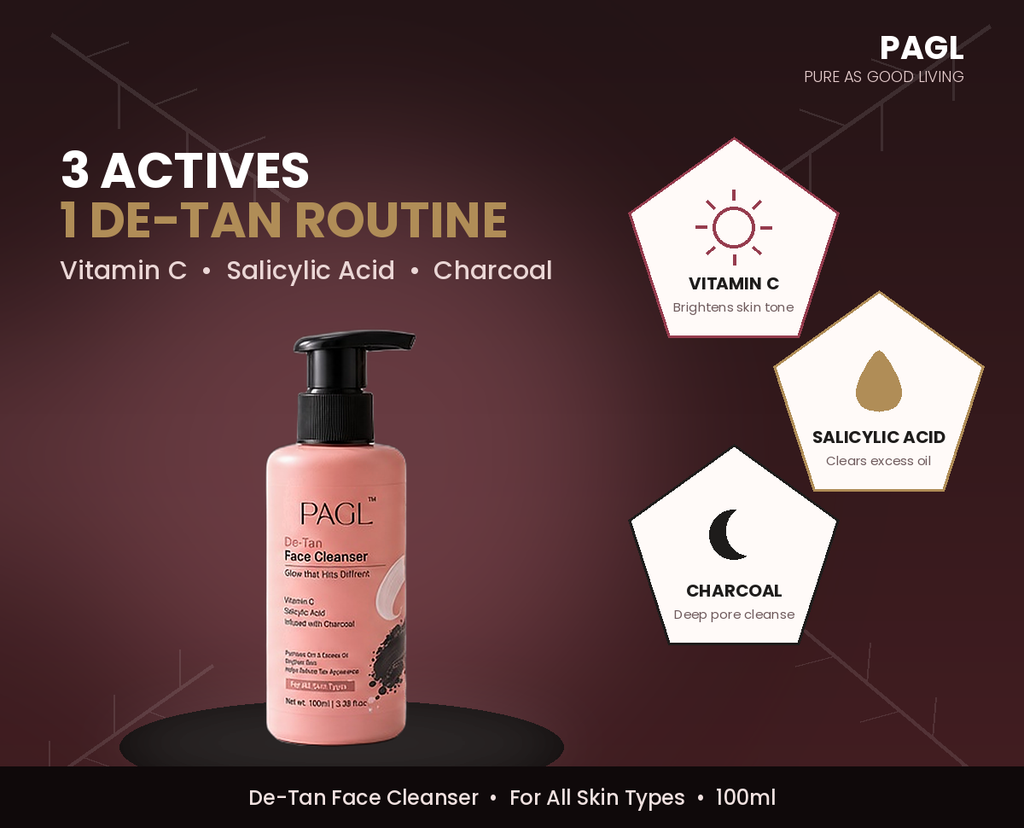
If you are completely new to active ingredients, starting with a Vitamin C cleanser, such as the PAGL De-Tan Face Cleanser with Vitamin C, Salicylic Acid and Charcoal, is often a gentler way to introduce your skin to the ingredient before committing to a leave-on serum.
Understanding Vitamin C Concentration
Vitamin C serums are usually labeled with a percentage, and this number matters more to beginners than most other skincare specifications.
| Concentration | Best Suited For |
|---|---|
| 5 to 10 percent | First-time users, sensitive skin, gentle daily introduction |
| 10 to 15 percent | Most users with some experience using active ingredients |
| 15 to 20 percent | Experienced users targeting more stubborn dullness or dark spots |
| Above 20 percent | Generally unnecessary for most people, higher irritation risk without proportionally better results |
As a beginner, starting at the lower end of this range and observing how your skin responds over two to three weeks is a far safer approach than jumping straight into a high-concentration formula because it seems more “powerful.”
How to Introduce Vitamin C Serum Into Your Routine
Step 1: Patch Test First
Before applying any new serum to your full face, apply a small amount to your inner arm or jawline and wait 24 hours to check for irritation. This is a simple step that beginners often skip, but it can save you from a face full of irritation later.
Step 2: Start With Every Other Day
Rather than using your new serum twice daily right away, start with once daily, or even every other day, for the first one to two weeks. This gives your skin time to adjust before increasing frequency.
Step 3: Apply in the Correct Order
Vitamin C serum goes after cleansing and toning, but before moisturizer. Applying it on freshly cleansed, slightly damp skin helps with absorption.
Step 4: Always Follow With Sunscreen
Vitamin C can increase your skin’s sensitivity to sun exposure, making daily sunscreen essential, especially since you are using it partly to counter the effects of sun damage in the first place.
Morning or Night: When Should Beginners Use Vitamin C Serum?
Vitamin C serum can technically be used morning or night, but for beginners, morning use is often recommended, since its antioxidant properties help defend against the sun and pollution exposure your skin faces during the day. If you prefer using it at night, that works too, just ensure your morning sunscreen routine remains consistent regardless of when you apply the serum.
How to Store Vitamin C Serum Correctly
Vitamin C, particularly in its purest form as ascorbic acid, can be sensitive to light and air exposure, which can reduce its effectiveness over time. A few simple storage habits help preserve your serum:
- Keep the bottle tightly closed when not in use
- Store it in a cool, dark place, away from direct sunlight
- Watch for changes in colour or smell, since a serum that has turned noticeably darker or developed an off smell may have degraded and lost potency
Common Beginner Mistakes With Vitamin C Serum
- Starting with too high a concentration, assuming stronger means better results faster
- Skipping the patch test, then dealing with unexpected irritation on the full face
- Applying it before cleansing, rather than after, reducing how well it absorbs
- Forgetting sunscreen, undermining both the serum’s benefits and your skin’s protection
- Expecting immediate results, when Vitamin C typically needs four to six weeks of consistent use to show visible brightening
- Layering it with too many other actives at once, increasing the risk of irritation before your skin has adjusted to any single ingredient
Staff picks
-
De-Tan Face Cleanser with Vitamin C, Salicylic Acid & Charcoal
Original price was: ₹599.00.₹540.00Current price is: ₹540.00. -
Rose Water Face Mist Spray | Natural Toner for Face, Skin & Hair | Hydrating, Refreshing & Alcohol-Free
Original price was: ₹199.00.₹180.00Current price is: ₹180.00.


Building a Simple Beginner Routine Around Vitamin C
- Cleanse with a gentle, Vitamin C infused formula like the PAGL De-Tan Face Cleanser to introduce the ingredient gradually.
- Tone with a hydrating, alcohol-free mist such as the PAGL Rose Water Face Mist.
- Apply Vitamin C serum, starting at a low concentration and low frequency, once your skin is comfortable with the cleanser.
- Moisturize to lock in hydration.
- Apply sunscreen every morning, without exception.
This gradual approach, cleanser first, serum later, tends to work better for true beginners than starting with a concentrated serum on day one.
How Long Before You See Results?
Patience matters more than intensity here. Most beginners notice fresher, slightly brighter-looking skin within two to three weeks of consistent use, with more visible improvements in tone and dullness developing over six to eight weeks. Judging a new serum too early is one of the most common reasons beginners give up before it has had a real chance to work.
Building a Complete Routine as You Progress
Once your skin has comfortably adjusted to Vitamin C, you can explore the broader PAGL Face Care collection to round out your routine with complementary products as your skincare needs evolve.
Conclusion – Start Gently, Stay Consistent
Vitamin C serum is a genuinely excellent ingredient to begin your active-ingredient skincare journey with, but success as a beginner comes down to starting gently, patch testing, choosing a lower concentration, and giving your skin time to adjust before increasing frequency or strength. Rushing this process is the most common reason beginners end up with irritation instead of the brightening results they were hoping for.
If you would rather ease into Vitamin C through your daily cleanser before committing to a serum, the PAGL De-Tan Face Cleanser with Vitamin C, Salicylic Acid and Charcoal offers a gentle, beginner-friendly starting point.
Frequently Asked Questions
Beginners should start with a lower concentration, around 5 to 10 percent, to allow their skin to adjust before moving to higher concentrations. Starting too strong can increase the risk of irritation without proportionally better results.
Morning use is often recommended since Vitamin C’s antioxidant properties help defend against daily sun and pollution exposure. Night use also works, as long as daily sunscreen remains part of your morning routine.
Not necessarily. A Vitamin C cleanser, like the PAGL De-Tan Face Cleanser, offers a gentler, lower-commitment way to introduce the ingredient, while a serum provides more concentrated, targeted results. Beginners can start with a cleanser and add a serum later as their skin adjusts.
Keep the bottle tightly closed, store it in a cool, dark place away from direct sunlight, and watch for changes in colour or smell, which can indicate the serum has degraded and lost potency.
Most beginners notice fresher, slightly brighter skin within two to three weeks of consistent use, with more visible improvements in tone typically developing over six to eight weeks.
Ready to start your Vitamin C journey? Shop PAGL De-Tan Face Cleanser today.















Leave a Reply